Students got 60 minutes and Macaly. The results surprised even the pros
“A lot of people hesitate to try vibe coding. They think they're not technical enough or that it's not for them. Sixteen-year-old students with far less experience proved the opposite in just one hour.”

Jindra Fáborský
Marketer, educator and DemocraTICon mentor
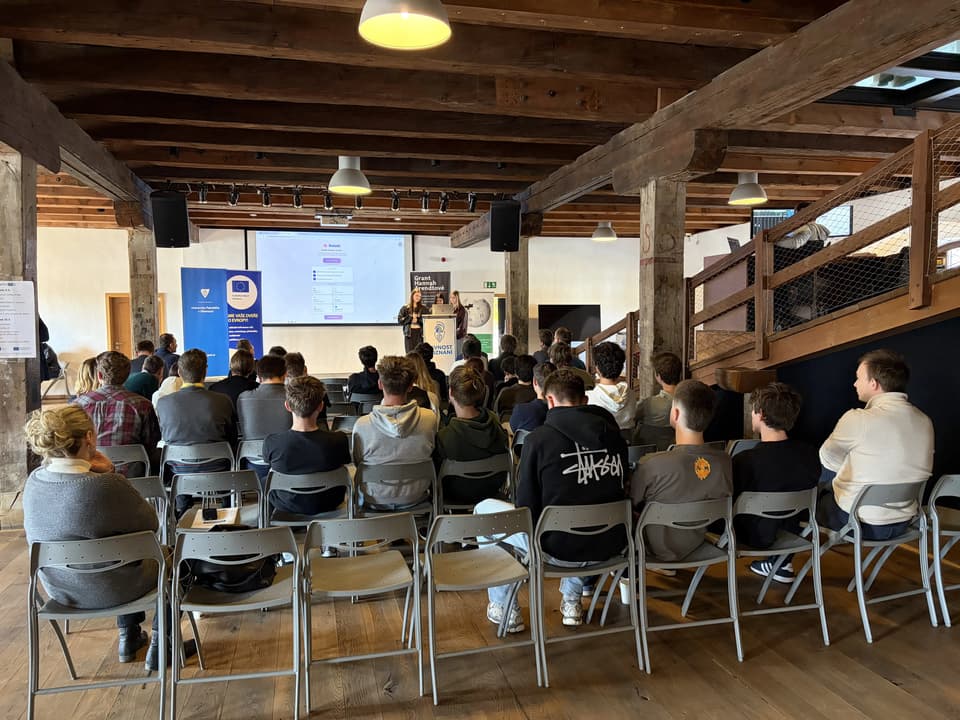
Marketer and educator Jindra Fáborský joined this year's DemocraTICon as a mentor. The competition brings together high school teams from across Czechia to test their skills in digital literacy, media literacy, and critical thinking.
This year, for the first time, vibe coding was one of the final disciplines.
"I expected to spend my time fixing broken apps. Instead, I was helping students push their ideas further. My role wasn't tech support, it was expanding how they think: from a user perspective and from a marketing perspective," says Fáborský, who has spent recent years teaching AI and vibe coding.
Students built their apps using Macaly, a Czech tool that runs entirely in the browser with no installation or dev environment setup required.
The brief: a working app in one hour
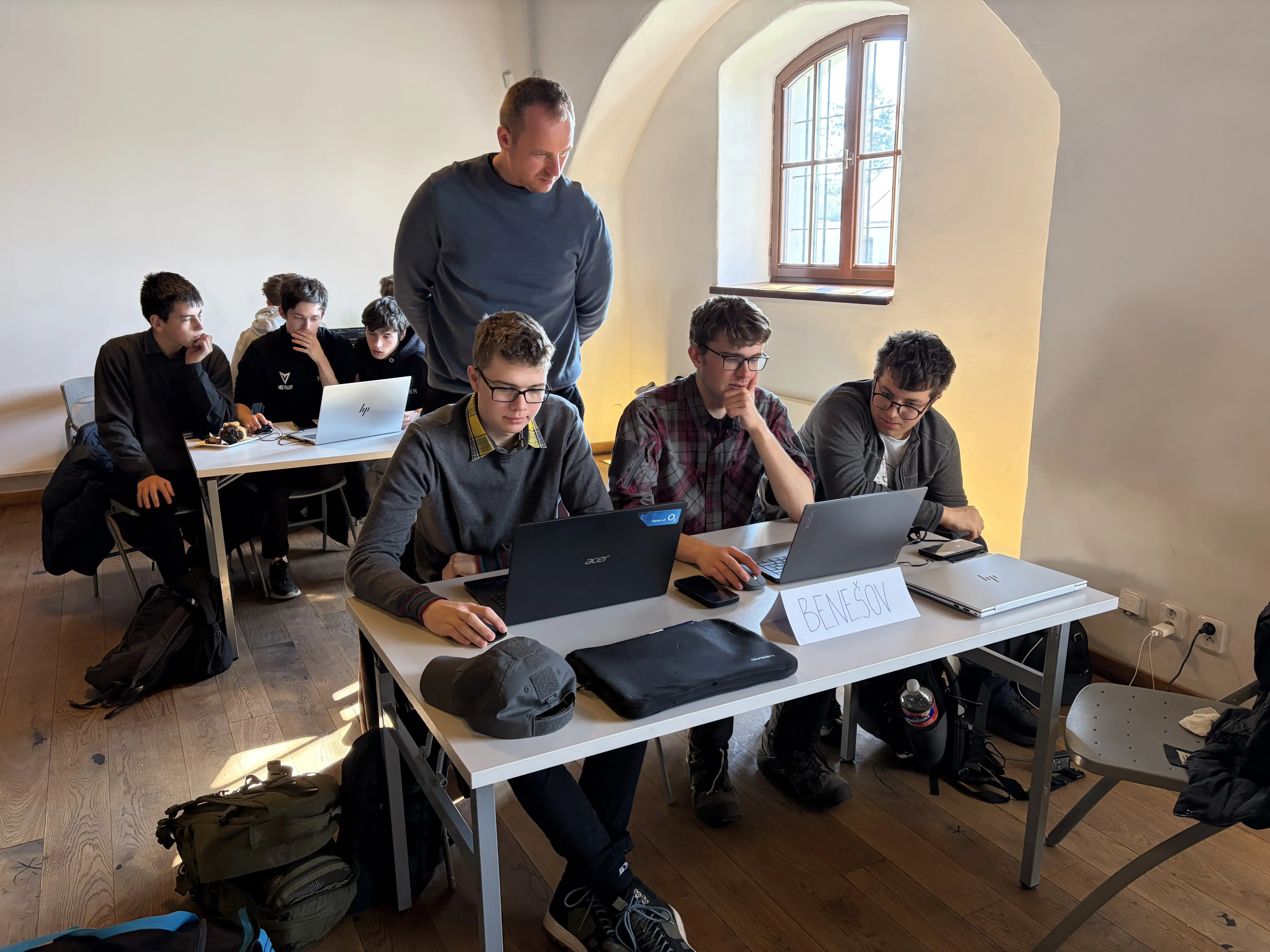
Eleven teams from high schools across Czechia received the same challenge: build a study app that takes any text and generates quiz questions from it. The app had to support difficulty levels, different question types, and instant feedback.
Teams had 60 minutes of build time. Every single one delivered a working solution.
The teams themselves were wildly diverse. IT schools, grammar schools, a graphic design school, even auto mechanics. Some had years of programming experience. Others had never heard the term "vibe coding" before that day.
The range of results was just as wide. On one end, an IT team managed to build a backend, database, user registration, and email verification with confirmation codes — all in under an hour. On the other end, a graphic design team spent the first 20 minutes picking colors and drawing an avatar, and ended up delivering the most visually polished result.
What students figured out on their own
Without formal programming skills or prior experience with app architecture, students independently arrived at three distinct approaches to evaluating user answers:
String comparison — the app checks whether the input exactly matches the correct answer. Simple and fast, but doesn't handle typos or inflected forms.
AI-based evaluation — the answer is assessed by a language model that understands intent and broader context. Students figured out on their own that this approach costs time and money, and made conscious decisions about whether to use it.
Self-assessment — the app shows the correct answer and lets the user decide whether they got it right. An elegant solution with no AI dependency and none of the limitations of exact matching.
None of these concepts were part of the brief. Teams discovered them during development and treated them as deliberate architectural decisions.
Vibe coding isn't just an IT discipline
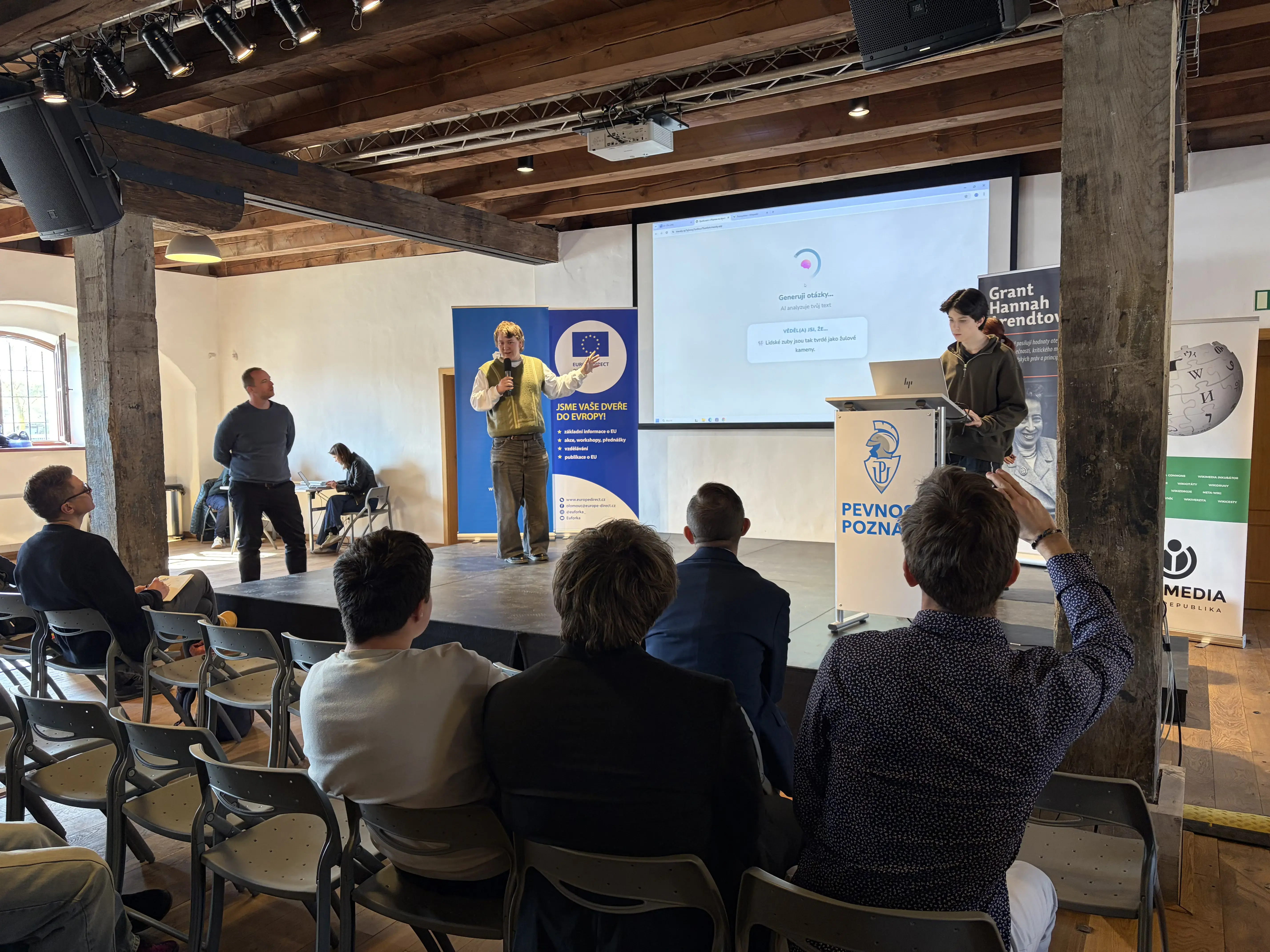
One of the biggest surprises of the hackathon wasn't how IT teams performed, it was how everyone else did. Each team brought something different: some offered technical depth, others aesthetic sensibility, UX intuition, or creative ideas.
"It shows that vibe coding isn't just for techies. Anyone can do something meaningful with it. Students don't carry the same assumptions adults do. They have imagination instead, and now they have the tools to run with it," says Fáborský. What matters most, he believes, isn't technical training but the ability to think through a problem, make deliberate choices, and bring something of your own to a project.
Fáborský covers the full story of this DemocraTICon discipline in his podcast episode Středoškoláci se učí vibe codovat (in Czech). If you want to go deeper, it's well worth a listen.
Run a student hackathon yourself
Organizing a simple hackathon for your students is easier than you might think. And it's not just for computer science classes. Vibe coding works anywhere you want students to tackle a real problem and turn it into a working result — whether that's geography, chemistry, or English.
Come up with a brief — ideally something concrete that students can realistically finish in one or two class periods. A quiz, a simple game, or a website.
Let them build — students sign up at macaly.com and start creating. Macaly runs in the browser, so there's nothing to download or install.
Present the results — this is often the most valuable part. Each team shows what they built and why. The goal isn't to reward the prettiest app, but to name the decisions students made along the way.
Every new Macaly account comes with 3 million free credits. For a one-time hackathon, that's more than enough — students can build a first version of their app without any issues. If you're thinking about using it longer-term in your classes or want to involve more students, get in touch and we'll be happy to support your school.